Overview: where the difficulty lives
Bubble size ≈ risk (scaled harder). Left→right = more mechanics load. Bottom→top = more texture/artistry load.

Mechanics index uses a consistent mapping (speed/endurance/leaps/contortion/chord violence), not pair-specific axis positions.
Chopin Ballade No. 1 (Op.23) vs Étude Op.10 No.12 “Revolutionary”
Story-form volatility vs left-hand storm endurance.
 Frédéric Chopin
Hard facts (quick receipts)
- Henle difficulty: Both are rated level 8 (“difficult”) in Henle’s system.
- Ballade g minor: Composed 1835, first published 1836.
- Revolutionary Étude: Published 1833 (cycle Op.10).
Why pianists fight about it
- Ballade No. 1 sounds “narrative,” so people underrate how many *structural* ways it can implode when nerves spike: pacing, climaxes, coda aim.
- “Revolutionary” looks like “left hand go brr,” so people over-index on arm fatigue and forget the right-hand theme has to *lead* and *sing*.
Technical hotspots (the actual deciders)
- Ballade: the coda: Leap‑landing precision under adrenaline; right-hand can’t flinch on landing or the whole thing smears.
- Ballade: long‑range form: Rubato choices early determine whether the piece has somewhere to grow—this is cognitive load, not just fingers.
- Revolutionary: LH stream: Evenness *and* power without locking the wrist; manage lateral motion so it’s not a repetitive‑strain factory.
- Revolutionary: RH theme: Melody must project cleanly over the LH roar; if you tense to get volume, the line dies.
Biomechanics (failure modes)
- Ballade No. 1: Failure mode is often **aim + decision fatigue**: constant re-targeting of voicing and jumps.
- Revolutionary: Failure mode is often **endurance + tension spiral**: sustained fast LH motion encourages tightening unless the arm carries weight efficiently.
Sources used for the receipts
Difficulty fingerprint

Read it like a heat signature: high on Mechanics = body tax; high on Texture = mind+ear tax; high Risk = stage tax.
Beethoven “Moonlight” Sonata (Mvt. III) vs Chopin Fantaisie‑Impromptu (Op.66)
Motor clarity vs polyrhythmic independence.
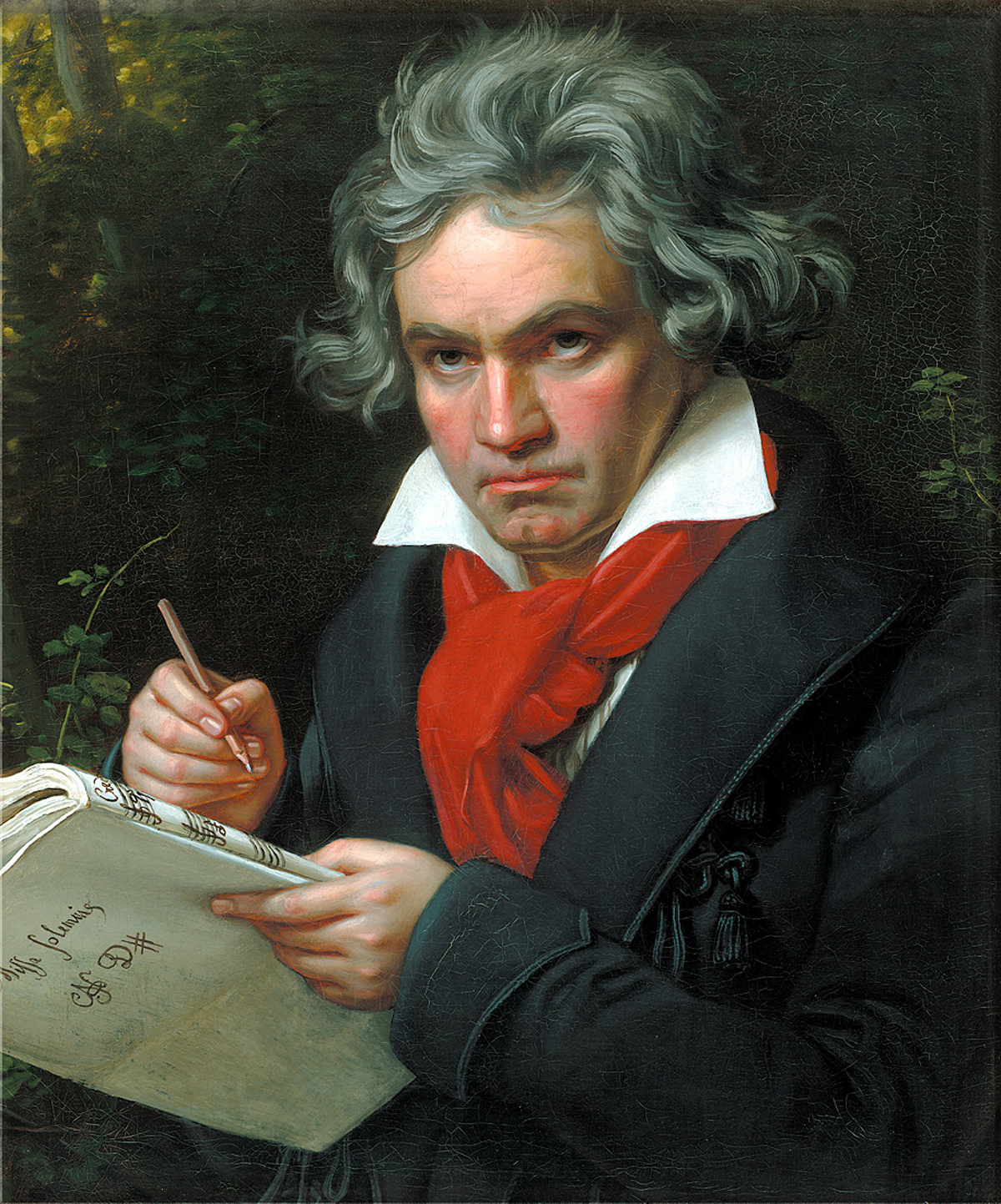 L. van BeethovenFrédéric Chopin
Hard facts (quick receipts)
- Fantaisie‑Impromptu dates: Composed 1834; published posthumously 1855.
- Perception gap: Both are ‘famous hard,’ but difficulty lives in different failure modes (clarity vs coordination).
Why pianists fight about it
- Moonlight III exposes you: too much pedal = blur; too little = brittle. Keeping it brilliant but clean at tempo is a public‑risk test.
- Fantaisie‑Impromptu’s 4‑against‑3 coordination tax is real: people can play the notes yet still sound uneven or mechanically “practiced.”
Technical hotspots (the actual deciders)
- Moonlight III: perpetual motion texture: The piece punishes any unevenness—tiny bumps read as panic.
- Moonlight III: accent shaping: Accents must be musical (phrase) not mechanical (muscle).
- Fantaisie‑Impromptu: 4:3 alignment: Two clocks: RH groups of four against LH triplets; must feel one pulse underneath.
- Fantaisie‑Impromptu: evenness at speed: Listeners hear bumps instantly; the real skill is smoothing transitions between finger groups.
Biomechanics (failure modes)
- Moonlight III: Sustained finger repetition → forearm endurance and tension management.
- Fantaisie‑Impromptu: Independence → nervous-system timing; stiffness shows up as ‘lurching’ alignment.
Sources used for the receipts
Difficulty fingerprint

Read it like a heat signature: high on Mechanics = body tax; high on Texture = mind+ear tax; high Risk = stage tax.
Ravel “Scarbo” (Gaspard de la nuit) vs Balakirev “Islamey”
Quiet terror engineering vs high‑octane virtuoso brawl.
 Maurice Ravel
 Mily Balakirev
Hard facts (quick receipts)
- Famous claim: Ravel intended Scarbo to be more difficult than Islamey (widely cited).
Why pianists fight about it
- Both are ‘Everest’ symbols. Islamey is a straight-up speed + pattern brutality benchmark.
- Scarbo is *quiet difficulty*: fast, low-dynamic control + sudden shape shifts—harder to fake.
Technical hotspots (the actual deciders)
- Scarbo: quiet repeated notes: Soft repeated-note control is harder than loud; any unevenness sounds like a malfunction.
- Scarbo: lightning jumps + flashes: Micro‑precision alternates with large arm moves. Miss one landing and the illusion breaks.
- Islamey: continuous velocity: Fast passagework with hand-shape flips demands steel rhythm; tempo sag is instantly obvious.
- Islamey: endurance spikes: When you’re already tired, it asks for more speed—classic ‘late‑piece betrayal.’
Biomechanics (failure modes)
- Scarbo: Fast switching between tiny finger actions and large arm moves → neuromuscular ‘gear shifting.’
- Islamey: Sustained high-speed work → horsepower + stamina, with fewer ‘reset’ moments.
Sources used for the receipts
Difficulty fingerprint

Read it like a heat signature: high on Mechanics = body tax; high on Texture = mind+ear tax; high Risk = stage tax.
Liszt Réminiscences de Don Juan (S.418) vs Réminiscences de Norma (S.394)
Headline virtuosity vs texture-and-voicing suffocation.
 Franz Liszt
Hard facts (quick receipts)
- IMSLP pages: Both works have dedicated IMSLP entries for editions and metadata.
Why pianists fight about it
- Don Juan has the meme aura: glitter, speed, chromatic thirds. It’s the piece people name first.
- Norma is the connoisseur monster: denser textures and more pages where voicing decisions are life-or-death.
Technical hotspots (the actual deciders)
- Don Juan: chromatic thirds + webs: Finger independence at extreme speed; tension creeps in when you ‘chase’ notes laterally.
- Don Juan: synchronized jumps: Both hands have to land together with orchestral certainty—no “close enough.”
- Norma: layered singing: Melody + inner voices + bass architecture must be shaped simultaneously.
- Norma: anti‑fog pedaling: If you pedal like Chopin, it becomes blur; clarity requires calculated, changing pedal strategy.
Biomechanics (failure modes)
- Don Juan: High-speed finger mechanics + lateral motion management (avoid twisting).
- Norma: Sustained voicing across thick chords → hand-span politics + long-duration control.
Sources used for the receipts
Difficulty fingerprint

Read it like a heat signature: high on Mechanics = body tax; high on Texture = mind+ear tax; high Risk = stage tax.